
The Definitive Speckled Sussex Guide: Egg Colors, Laying Timelines, Sexing Chicks, and Breeder Secrets
If you are building a backyard flock designed to be highly productive, exceptionally hardy, and visually stunning, you are likely looking for birds that seamlessly check every single box. In the world of heritage poultry, few breeds carry themselves with the sheer historical prestige, calm disposition, and absolute utility of the Sussex chicken.
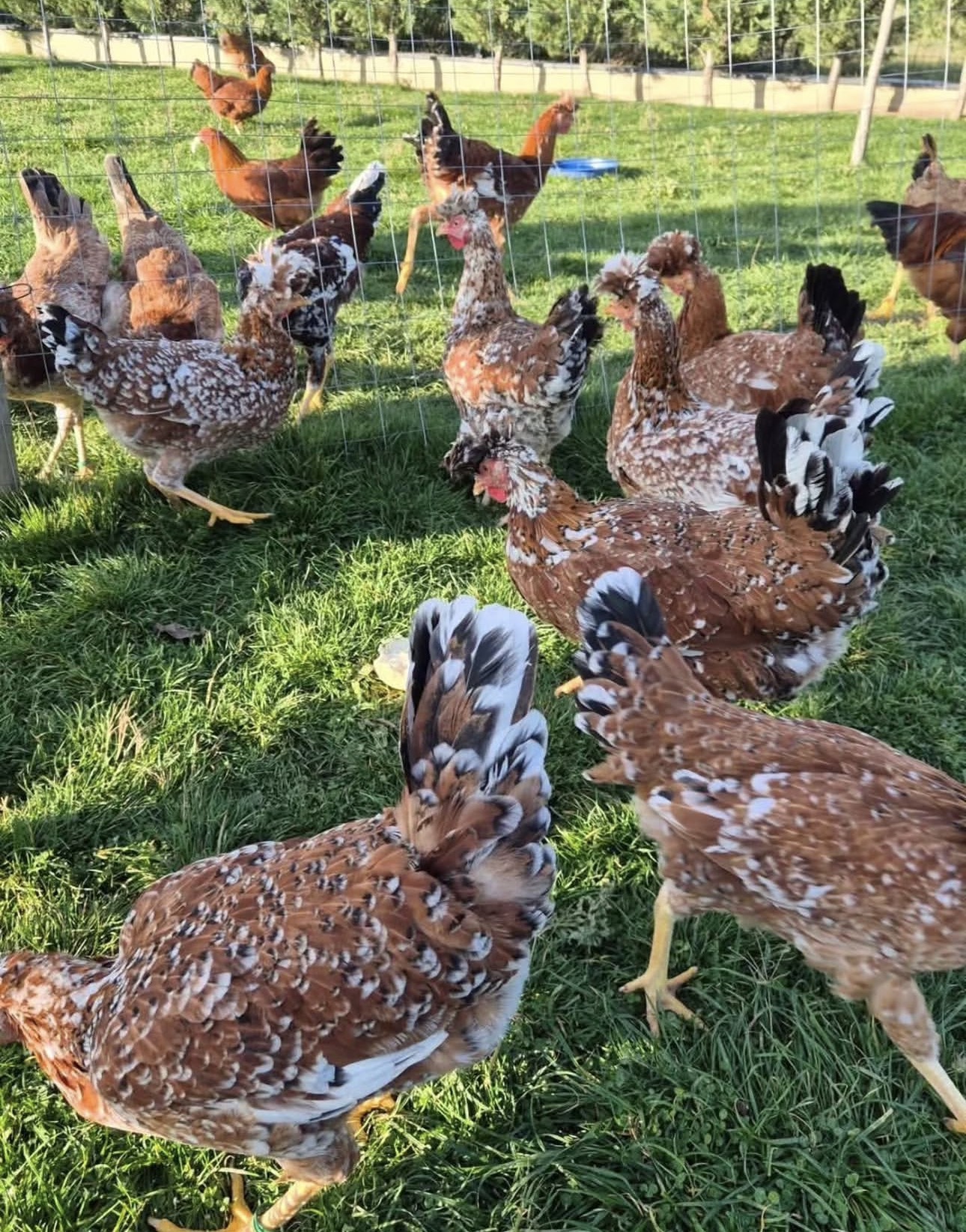
Originating over two centuries ago in the historic market counties of southeastern England, the Sussex breed remains a crown jewel of traditional farming. Among its recognized varieties, the Speckled Sussex stands out as an absolute masterpiece of genetic design. With their deep mahogany coats, iridescent black bars, and snowy white tips, a flock of these birds moving across pasture looks like living calico art.
But when you commit to bringing these heavy-bodied beauties onto your homestead, you need clear, factual answers to plan your infrastructure, budget, and expectations. What color eggs do Speckled Sussex chickens lay? When do Speckled Sussex start laying eggs? How many eggs does a Sussex chicken lay per year? And how can you accurately sex a Speckled Sussex chick before it starts to crow?
This comprehensive manual delivers the deep-dive breeder insights, exact anatomical benchmarks, and management strategies you need to master this iconic heritage breed.
1. The Core Answer: What Color Eggs Do Speckled Sussex Lay?
If your goal is to build an aesthetically striking, colorful egg basket, understanding the exact shell pigmentation of your flock is essential.
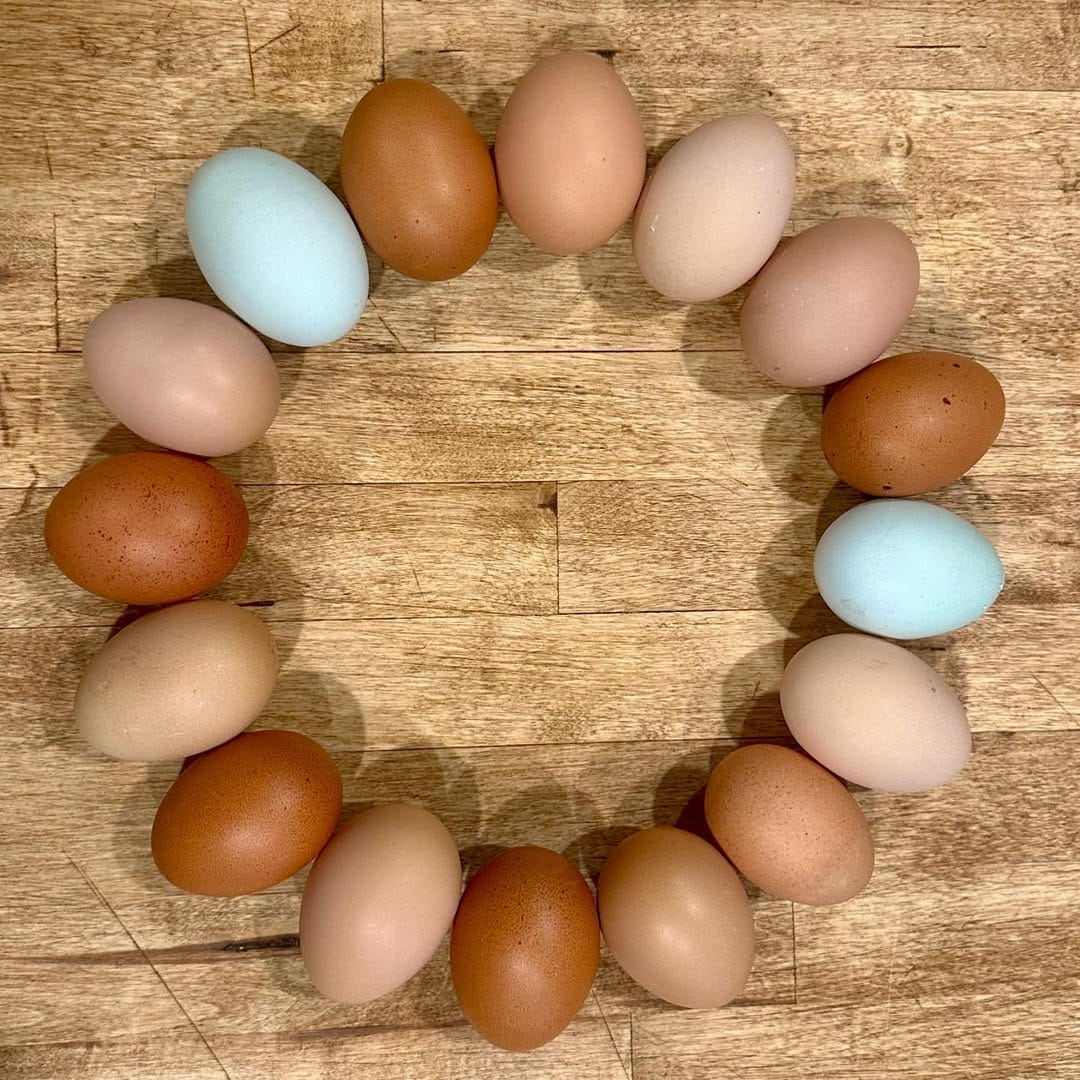
A healthy Speckled Sussex chicken lays a beautiful light brown, cream, or tinted tan egg.
The Natural Science of the “Bloom” Effect
While they are fundamentally classified as light brown layers, the actual visual appearance of a fresh Sussex egg can vary dramatically from morning to morning. This variation is driven by a natural phenomenon known as the bloom or cuticle. The bloom is a thin layer of protein, calcium fluid, and mucin applied to the exterior of the shell in the final 90 minutes of the oviduct journey, serving as an antimicrobial sealant.
On a Sussex egg, this heavy, chalky bloom frequently refracts light in an unusual way, casting a soft, unmistakable purple or pinkish tint over the tan shell. If you collect eggs daily from a diverse flock of heritage birds, the unique pastel-pink hue of a Sussex egg is instantly recognizable next to the matte chocolate brown of a Marans or the sky blue of an Ameraucana.
Internal Quality Metrics
Beyond the aesthetic appeal of the shell, the internal composition of a Sussex egg is robust. Due to their active foraging habits and high conversion efficiency of wild carotenoids (found in fresh clover, dandelion leaves, and grubs), their yolks are consistently dense, deep orange, and framed by firm, thick albumen.
2. Production Metrics: How Many Eggs Does a Sussex Chicken Lay?
Historically, the Sussex was bred to feed London markets during the Victorian era. It was esteemed as the premier dual-purpose fowl of the British Empire, valued equally for its plump, white meat and its relentless ability to lay right through the dead of winter.
When analyzing total annual yield, the breed effortlessly outpaces many other heavy heritage breeds like Buff Orpingtons, Cochins, or Brahmas.
Annual Production Breakdown by Variety
The Sussex family includes several distinct plumage varieties, each exhibiting minor differences in egg-laying frequency due to historical line breeding:
| Sussex Variety | Average Annual Yield | Eggs Per Week | Core Shell Coloration |
| Speckled Sussex | 200 – 250 Eggs | 4 – 5 | Cream, Tan, Pinkish Tint |
| Light Sussex | 240 – 260 Eggs | 5 | Pale Brown to Tinted Cream |
| Coronation Sussex | 220 – 250 Eggs | 4 – 5 | Light Tan |
| Red / Buff Sussex | 180 – 220 Eggs | 3 – 4 | Deep Cream |
Size and Quality Graded Development
When a Speckled Sussex pullet first enters production, her initial eggs will be classified as “pullet eggs”—small, highly concentrated, and occasionally double-yolked as her reproductive system stabilizes. However, within 4 to 6 weeks of consistent laying, her egg size scales up significantly, settling into a dependable Large to Extra-Large grade.
The Winter Laying Advantage
One of the primary reasons commercial homesteaders integrate the Sussex into their programs is their cold-weather resilience. Many heritage breeds completely shut down production as daylight hours drop below 12 hours in the autumn and winter. Because the Sussex was developed in the cold, damp, clay-heavy fields of southeastern England, they possess an inherent metabolic tolerance for low light and dropping temperatures, keeping your nesting boxes active when other breeds stall.
3. The Timeline: When Do Speckled Sussex Start Laying Eggs?
Patience is a fundamental requirement when working with old-world heritage poultry genetics. Unlike highly industrial, commercialized hybrid layers—such as Golden Comets, ISA Browns, or Red Stars, which are bred to rapidly burn through their biological reserves and begin laying at 16 weeks—the Sussex takes a slow, balanced approach to physical development.
The Laying Target Window
A Speckled Sussex pullet will typically lay her first egg between 20 and 24 weeks of age (roughly 5 to 6 months). If your bloodline stems from older, heavier exhibition stock, it is not uncommon for hens to take up to 26 to 28 weeks to drop their first egg.
Biological Dependencies and Environmental Triggers
The exact day your birds enter production depends on three critical axes:
1. Environmental Photoperiodism (Daylight Exposure)
Chickens require approximately 14 to 16 hours of light hitting their pineal gland to trigger the hormonal cascade that releases yolks from the ovary. If your Speckled Sussex chicks are hatched in the late spring or mid-summer, their 20-week milestone will land in late autumn or early winter.
Without supplemental coop lighting, their reproductive development will naturally enter a holding pattern until the winter solstice passes and daylight hours expand in the spring.
2. Structural Protein and Calcium Ratios
Developing a bird that carries a mature weight of 7 pounds requires significant nutritional scaffolding. If a pullet is switched to a low-protein scratch diet or transitioned to a heavy-calcium layer feed too early, her kidneys can suffer permanent damage, or her growth can stunt, delaying egg production.
Maintain a high-quality 16% to 18% grower ration up until the exact week the first egg appears.
[Weeks 0-8: Chick Starter (18-20% Protein)]
                 ↓
[Weeks 9-20: Developer/Grower (16-18% Protein)]
                 ↓
[Weeks 21+: Layer Ration (16% Protein + Free-Choice Calcium)]
3. Stress and Flock Dynamics
The Sussex is a gentle, docile breed that typically occupies the middle-to-lower tiers of a mixed-breed pecking order. If they are constantly harassed or driven away from feeders by more aggressive breeds (like Rhode Island Reds or Wyandottes), their high cortisol levels will actively suppress egg production.
Final Signs: Identifying a Pullet Point-of-Lay
As your Speckled Sussex pullets approach their milestone, their bodies will exhibit clear physical indicators:
-
Vascular Flushing: The comb, wattles, and bare skin surrounding the eyes will transform from a dull, pale pink into an incredibly vibrant, swollen crimson red as blood flow diverts to the reproductive system.
-
Pelvic Bone Expansion: If you gently palpate the rear abdomen below the vent, you will notice the two pelvic bones loosen and widen. A non-laying pullet will have a tight, single-finger gap; a hen ready to lay will exhibit a wide, flexible two-to-three-finger spread.
-
The Submissive Squat: When you walk past or reach out to handle the bird, she will stop, drop flat to the ground, and extend her wings slightly sideways. This instinctual reflex indicates her body recognizes mature reproductive hormones.
4. Anatomical Identification: What Do Speckled Sussex Chickens and Chicks Look Like?
To master this breed, you must understand how their plumage shifts over time. The Speckled Sussex undergoes a radical transformation from the brooder to the mature pasture.
Adult Structural Standards
According to the official breed standards recognized by organizations like the American Poultry Association (APA) and the Poultry Club of Great Britain, a mature Sussex should display a long, deep, rectangular body shape with a flat, wide back and a tail carried at a modest 45-degree angle.
Their skin, beak, and shanks must be pinkish-white or horn-colored. If you ever see a bird marketed as a pure Sussex that displays yellow legs, yellow skin, or green shanks, it is a definitive genetic indicator of crossbreeding (often an accidental cross with a Rhode Island Red or a Plymouth Rock).
The Architecture of a Speckled Feather
The visual pattern of a Speckled Sussex is highly complex. Each feather contains three distinct color bands:
-
Base: A rich, deep mahogany-red ground color.
-
Middle: A sharp, dark crescent or bar of iridescent black featuring a beetle-green sheen.
-
Tip: A distinct, pristine white diamond or spot at the absolute terminal edge.
The Molting Progression Secret: One of the most fascinating aspects of raising a Speckled Sussex is their progressive speckling. Every time a Sussex hen undergoes her annual autumn molt, her feather follicles modify the distribution of white pigment. As a general rule, Sussex chickens grow whiter and more heavily frosted with every single molt. A young pullet in her first year may look dark and predominantly mahogany; by her third year, she will look beautifully snow-tipped and frosted.
What Do Speckled Sussex Chicks Look Like?
If you are sorting through a mixed bin of day-old chicks, a baby Speckled Sussex is easy to isolate. They are entirely covered in soft, thick, creamy-buff down feathers, contrasted by two bold, dark brown “racing stripes” extending down their backs from the base of the skull to the tail. Their faces are clear of fluff or muffs, and their legs are completely bare, smooth, and pinkish-gray.
5. Gender Determination: How to Sex Sussex Chickens
Because the Sussex is an ancient, pure heritage breed rather than a modern, commercial sex-linked crossbreed, you cannot separate males from females at hatch based on feather color or down patterns. For small-scale homesteaders and poultry breeders, learning to read early anatomical and structural indicators across developmental milestones is paramount to maintaining a balanced coop.
The Danger of Vent Sexing
While professional hatcheries employ highly trained vent-sexers who examine the internal cloaca of day-old chicks, this technique requires years of microscopic practice. Attempting to vent-sex your own day-old chicks can easily result in fatal internal structural tearing or prolapse. Instead, use these accurate external benchmarks as your birds mature:
Timeline Benchmarks for Sexing Sussex Fowl
Milestone 1: The Early Stages (3 to 6 Weeks)
During the initial weeks in the brooder, look past the feathers and focus exclusively on vascular development and leg bone mass.
-
Comb Architecture and Coloration: The Sussex features a classic single comb. In pullets, this comb remains small, flat, thin, and distinctly pale pink or yellowish. In young cockerels (roosters), the base of the comb will rapidly thicken, and the serrated points will pop up, shifting to a noticeable salmon-pink or warm red long before the rest of the body finishes feathering.
-
Shank Caliber: Look closely at the bare legs of your chicks. Young roosters carry significantly more skeletal mass. Their shanks (the leg bone between the hock and toes) will be noticeably thicker in diameter compared to the delicate, slender shanks of the pullets.
Milestone 2: Juvenile Plumage Dynamics (8 to 12 Weeks)
By the two-to-three-month mark, secondary sexual characteristics driven by testosterone and estrogen dictate the structural shape of individual feathers. This is the most definitive window for physical identification.
-
Hackle Feathers (The Neck): Catch your bird and gently isolate the feathers draping around the base of the neck. A pullet’s hackle feathers are wide, blunt, and completely rounded at the tips. A cockerel’s hackle feathers are long, narrow, and sharply pointed, eventually forming a glossy cape that catches the sunlight.
-
Saddle Feathers (The Lower Back): Examine the flat region of the back right before the tail structure. A female Sussex displays broad, flat, shield-like feathers that blend smoothly into the tail base. A male Sussex grows long, thin, dagger-shaped saddle feathers that drape down over the flanks like fine fringe.
-
Tail Plumage: While a pullet’s tail remains neat, compact, and arranged in a flat, vertical V-shape, a cockerel will begin growing long, fluidly curved sickle feathers that arch over the top of the main tail structure.
[At 8-12 Weeks]
 ├── If feathers are broad & rounded ──> Hen (Pullet)
 └── If feathers are sharp & pointed ──> Rooster (Cockerel)
Milestone 3: Behavior and Posture (12+ Weeks)
If you sit quietly near your run and observe flock interactions, behavioral differences will rapidly confirm your physical assessments.
-
Stance and Carriage: Cockerels carry themselves with an exaggerated, vertical, upright posture. They stand tall on their legs with their breasts pushed forward. Pullets maintain a lower, more horizontal, wedge-shaped silhouette.
-
Social Dominance: Young roosters show early signs of territorial and protective behavior. They will play-fight by raising their neck capes and chest-bumping brooder mates to establish dominance, and they are typically the first to charge toward a new food source or investigate an unfamiliar sound.
-
Vocalization: By 14 to 18 weeks, a cockerel’s voice will break, resulting in a comical, raspy, uncoordinated crowing sound. While a Sussex rooster has a deep, resonant crow, a hen is highly conversational, communicating via low, rhythmic, gentle clucks.
6. Sourcing Realities: Hatcheries, Big-Box Stores, and Tractor Supply
When the spring chick season arrives, millions of homesteaders visit local farm supply centers to browse the brooder displays. If you want to build a long-term, high-yielding flock, navigating your sourcing options with a critical eye is vital.
What Breeds of Chickens Does Tractor Supply Sell?
If you are wondering what type of chickens does Tractor Supply sell, their inventory fluctuates week-to-week based on seasonal hatchery surpluses and regional store locations. On any given “Chick Days” weekend, their stock generally falls into three distinct commercial buckets:
-
Commercial Production Hybrids: ISA Browns, Golden Comets, Cinnamon Queens, and California Whites—breeds optimized purely for industrial egg counts over a short 2-year lifespan.
-
Standard Heritage Categories: Rhode Island Reds, Barred Plymouth Rocks, Buff Orpingtons, and Black Australorps.
-
Ornamental/Exotic Variety Bins: Crested Polish, feather-legged Brahmas, Silkies, and occasionally Ameraucanas or Easter Eggers.
The Pitfalls of Big-Box Sourcing
While it is occasionally possible to find Speckled Sussex or Light Sussex tucked into an “Assorted Heavy Breed” or “Straight Run” bin at a big-box retailer, sourcing your foundation production animals from these massive commercial pools carries clear, distinct risks:
-
Mislabeling and Bin Contamination: Bins are frequently mixed up by hurried staff or curious customers lifting chicks out and returning them to the wrong sections. You can easily buy an “assorted pullet” only to discover months later it is a commercial rooster.
-
Diluted Genetic Selection: High-volume commercial hatcheries breed for quantity rather than quality. This results in a loss of the deep, rectangular breed standard, pale mahogany coloring, poor white-tip definition, and an increased susceptibility to structural issues like crooked toes or keel deformities.
-
Biosecurity Vulnerabilities: Industrial distribution hubs handle massive volumes of birds simultaneously, increasing exposure risks to opportunistic pathogens like Coccidiosis, respiratory Mycoplasma (MG), or internal parasites before the chicks ever reach your home brooder.
7. Elevate Your Flock with Grassfield Homestead
If you want to skip the lottery of commercial mystery bins and ensure your homestead is powered by elite, robust, and structurally correct poultry, sourcing your foundation stock from an intentional, biosecure breeding program makes all the difference.
At Grassfield Homestead, we maintain a deep, absolute dedication to preserving the true utility and breathtaking beauty of heritage and ornamental poultry. Our select lines of Speckled Sussex are painstakingly bred to hit precise breed standards: deep, blocky bodies, intense mahogany backgrounds, vivid green-black barring, and high-volume winter egg production.
Whether you are looking to secure guaranteed sexed day-old chicks, started pullets that are ready to transition directly into your outdoor coop, or premium, high-fertility hatching eggs for your own incubator, you can order directly from our farm at Grassfield Homestead. We package and ship our stock with extreme care, ensuring healthy, vibrant, champion-line genetics are delivered directly to your homestead.
8. Management Manual: Daily Care and Environmental Needs
Once you bring your Sussex chicks home, providing the proper environmental infrastructure will maximize their natural lifespan and laying efficiency.
Coop Architecture and Spatial Allocation
Because the Sussex is a heavy, substantial breed (with mature roosters reaching 9 pounds and hens averaging 7 pounds), they have specific structural coop requirements:
-
Floor Space: Provide a minimum of 4 to 5 square feet of indoor floor space per bird within the coop, combined with 10 to 12 square feet of outdoor run space. Crowding heavy breeds quickly triggers feather-pecking and egg-eating habits.
-
Roost Height and Structure: Heavy birds are prone to foot injuries—such as bumblefoot (staphylococcal pododermatitis) or bruised foot pads—if they are forced to jump down from high perches onto hard surfaces. Keep your roosting bars low to the ground (between 18 and 24 inches) and ensure the bars are wide and flat (such as the wide side of a 2×4 timber) so their heavy bodies are fully supported.
-
Nesting Boxes: Standard 12x12x12-inch nesting boxes lined with clean straw or hemp bedding are ideal. Mount them 12 inches off the ground to keep them pristine and prevent floor-laying habits.
Foraging Habits and Predator Defenses
The Speckled Sussex is an exceptional free-ranger. They possess an innate drive to forage, scratching deeply into leaf mulch and pasture to uncover hidden ticks, beetles, and weed seeds. Their calm, sensible nature makes them highly efficient at managing backyard pest populations.
However, their camouflage has a double edge. While their broken calico pattern makes them incredibly difficult for land predators (like foxes or coyotes) to track when they are foraging underneath brush or forest canopies, their bright white tips can catch the eyes of aerial predators like hawks if they are out in wide, open, sunlit fields. Always ensure your free-range pasture features natural cover—such as berry bushes or low-hanging willow trees—or construct artificial low-profile predator shelters so your birds can quickly dive out of sight.
Managing Broodiness (The Maternal Instinct)
Unlike modern commercial strains that have had the maternal instinct completely bred out of them, the Speckled Sussex remains a traditional, natural broody hen.
What to Expect
A Sussex hen will typically go broody once or twice a year, usually in the mid-to-late spring. She will stop laying eggs, park herself firmly inside a nesting box, fluff out her feathers, and hiss or puff up if you attempt to reach underneath her.
How to Handle It
-
If You Want to Hatch Chicks: The Sussex makes an outstanding, fiercely protective mother. Her heavy body covers a large clutch of 10 to 12 eggs easily, and her calm demeanor means she rarely panics or steps on breaking shells during lock-down.
-
If You Do Not Want to Hatch Chicks: A broody hen who isn’t sitting on fertile eggs will rapidly lose body weight and condition because she refuses to leave the nest to eat or drink. You must “break” her broodiness promptly. Transfer her to a wire-bottomed dog crate suspended slightly off the ground inside a bright, well-ventilated area of the coop for 3 to 5 days. The cool airflow underneath her belly will lower her core body temperature, safely disrupting the hormonal broody cycle and steering her back toward egg production.
9. Breed Comparison: Sussex vs. Other Heritage Heavyweights
Before finalizing your homestead layout, see how the Speckled Sussex stacks up side-by-side against other prominent dual-purpose heavy breeds across core performance metrics:
| Performance Metric | Speckled Sussex | Rhode Island Red | Buff Orpington | Black Australorp |
| Annual Egg Volume | 200 – 250 | 250 – 300 | 180 – 220 | 250 – 280 |
| Shell Coloration | Cream / Pink-Tint | Dark Copper Brown | Soft Muted Tan | Light Shiny Brown |
| Temperament Profile | Docile, Calm, Sweet | Assertive, Aggressive | Exceptionally Gentle | Docile, Alert |
| Foraging Efficiency | Excellent | Good | Moderate | Excellent |
| Cold Winter Hardiness | Exceptional | High | High | High |
| Mature Hen Weight | 7.0 lbs | 6.5 lbs | 8.0 lbs | 7.0 lbs |
While Rhode Island Reds may edge out the Sussex slightly on raw annual egg counts, they do so with a much sharper, territorial, and dominant personality that can easily disrupt a peaceful, mixed-breed family coop. The Sussex delivers a nearly identical production yield while maintaining a gentle, dog-like disposition that is safe around children and easy to manage for beginners.
To learn more about the deep agricultural history and preservation of this magnificent fowl, explore the definitive global archives via The Livestock Conservancy Sussex Breed Profile. For those interested in competitive poultry exhibitions and showing standards, read the exact morphological point breakdowns maintained by the American Poultry Association or The Poultry Club of Great Britain to fine-tune your flock’s selective breeding goals.
Newsletter Updates
Enter your email address below and subscribe to our newsletter