$35.00Original price was: $35.00.$30.00Current price is: $30.00.
Sourcing a Premium Blue Australorp Rooster for Sale for Flock Protection and Genetic Excellence
For homesteaders, poultry preservationists, and backyard flock managers, introducing a strong, capable rooster is a foundational step toward flock self-sufficiency. Just as building a successful apiary relies on selecting excellent, proven genetics for your queen bees, managing a sustainable poultry flock requires choosing the right foundational sire. While the classic black variety remains highly popular, the rare blue variant brings a striking visual depth alongside the legendary utility of the breed.
At Golden Hive Farm, we are dedicated to supporting sustainable homesteading and self-sufficient agriculture. While our core mission centers on manufacturing elite woodenware and sourcing biological essentials for honeybee colonies, we appreciate the deeper agricultural connection—where livestock and pollinators work together to improve soil health and create a thriving backyard ecosystem. Working with our trusted partners at Grassfield Homestead, we have put together this guide to help you manage your poultry ecosystem. Let’s examine the genetics, breed standards, and protective behaviors you need to know when looking for a premium Blue Australorp rooster for sale to upgrade your property.
1. The Heritage Blueprint: Understanding the Blue Andalusian Influence
To understand why experienced poultry keepers look for a premium Blue Australorp rooster for sale to lead their flocks, it helps to understand the unique genetic history behind this variety. Originally developed in Australia during the early 1900s primarily from English Black Orpington stock, breeders focused entirely on utility, high egg yields, and climate resilience.
+-----------------------------------+
|      Black Orpington Baseline     |
+-----------------------------------+
                  |
                  v  (Infused with Blue Andalusian Color Genetics)
+-----------------------------------+
|     The Andalusian Blue Gene (Bl) |
|   - Incomplete dominance matrix   |
|   - Introduces slate-blue tones   |
+-----------------------------------+
                  |
                  v  (Refined into the Modern Australorp Standard)
+-----------------------------------+
|     Blue Australorp Sire Stock    |
|   - Vigilant flock guardians      |
|   - Deep, broad dual-purpose frame|
+-----------------------------------+
The beautiful slate-blue coloration was introduced by incorporating Blue Andalusian genetics into the foundational lines. This color trait follows a specific genetic pattern known as incomplete dominance. When a rooster carries the blue gene, he can pass down a mix of black, blue, and splash (white with blue patches) offspring depending on the hens he mates with, making a blue sire a highly versatile asset for heritage breeding programs.
2. Breed Standards and Physical Characteristics of Blue Sires
When browsing specialized hatchery listings or visiting local farms to evaluate a Blue Australorp rooster for sale, knowing the official physical standards ensures you are investing in authentic, healthy, and structurally sound stock.
Stature, Build, and Color Geometry
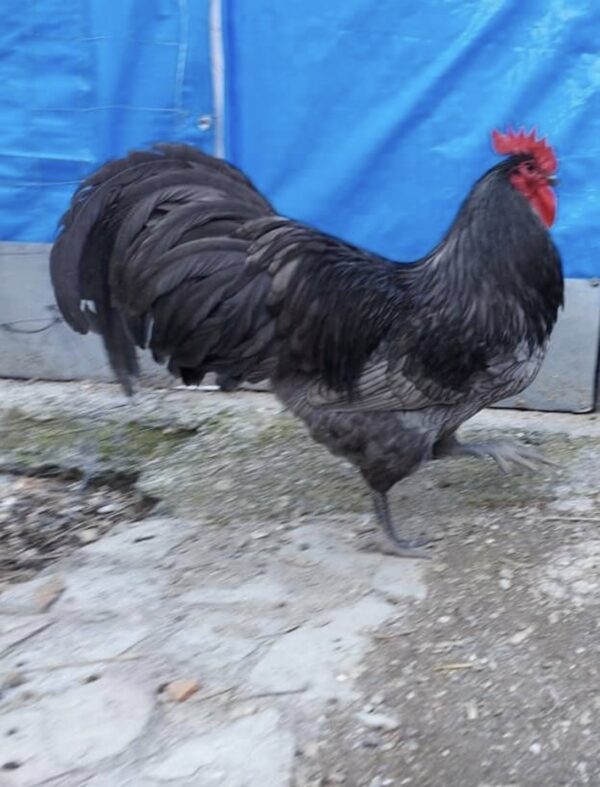
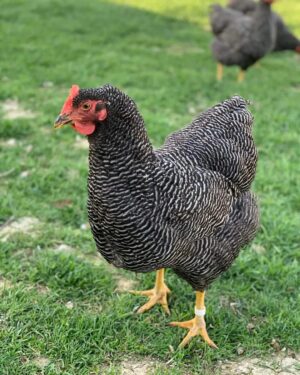
The Slate-Blue Plumage: A true Blue Australorp rooster features a striking slate-blue base color across his breast and body, with each feather cleanly defined by a darker blue border or lacing. His hackle, saddle, and tail feathers are a deep, contrasting velvety blue-black that catches the light beautifully.
Imposing Mass: These are large, heavy dual-purpose birds. A mature rooster typically weighs between 8.5 to 10 pounds ($3.9$ to $4.5\text{ kg}$), sporting a deep, broad, and forward-thrusting breast that reflects their meat utility.
Comb and Wattles: They feature a medium-to-large, perfectly upright single comb with five distinct points. The comb, wattles, and earlobes should be a smooth, vibrant, healthy red.
Legs and Eyes: The legs and toes are completely clean of feathers, showcasing a dark slate or solid black color, while the soles of their feet are distinctly pinkish-white. Their eyes are a deep, expressive dark brown or black.
3. Behavioral Dynamics: The Vigilant Flock Guardian
Beyond their beautiful looks, the behavioral traits of Australorp roosters make them exceptional choices for leading backyard flocks.
+--------------------------------------------------------------------------+
|                     Homestead Flock Dynamic Matrix                       |
+--------------------------------------------------------------------------+
|                                                                          |
|   [ Free Range ] <==== Active predator surveillance =====> [ Rooster ]   |
|          ^                                                       ||      |
|          |                                                       ||      |
|   Sounds warning alarms                                   Calm, steady   |
|          |                                               with keepers    |
|          v                                                       v       |
|   [ Production ] <==== Manages harem social order ========> [ Hens ]     |
|                                                                          |
+--------------------------------------------------------------------------+
Predator Surveillance and Harem Safety
An Australorp rooster is an active, highly observant protector. He spends his days scanning the sky and tree lines for aerial and ground predators like hawks, foxes, or raccoons. When a threat appears, his deep warning call immediately signals the hens to seek cover beneath the nearest brush or shelter. He will stand guard between his flock and the danger, ensuring every hen safely enters the coop.
Docility and Gentle Demeanor
While fiercely protective of his hens, the Australorp breed is renowned for its calm, sweet, and manageable nature. Unlike more aggressive breeds, an Australorp rooster is typically respectful of his human keepers, making daily tasks like egg gathering, water changes, and feeding stress-free for families and beginners.
4. Reproductive Management and Breeding Strategies
When you introduce a young male from listings of a Blue Australorp rooster for sale, understanding how his genetics interact with your flock helps you plan out future generations of chicks.
Optimal Rooster-to-Hen Ratios
To maintain a peaceful coop environment and ensure high fertility rates, maintain a proper social balance. A large, active Australorp rooster manages a harem of 10 to 12 hens perfectly. If you have too few hens, his constant attention can lead to feather wear on the hens’ backs; providing a proper ratio keeps your hens healthy and comfortable.
The Blue Breeding Color Outcome Matrix
Because the blue feather gene (Bl) is a dilution factor, crossing your blue rooster with different colored hens will yield predictable, fascinating color results in your spring chicks:
          Blue Genetic Cross Outcomes

    [ Blue Rooster x Black Hen ] --> 50% Blue Chicks / 50% Black Chicks
    [ Blue Rooster x Blue Hen ] ---> 50% Blue Chicks / 25% Black / 25% Splash
    [ Blue Rooster x Splash Hen ] -> 50% Blue Chicks / 50% Splash Chicks
5. Integrating a New Rooster Safely Into Your Setup
Bringing a mature male or a young cockerel onto your property requires a careful, methodical approach to protect your existing birds and establish a healthy social structure.
Step 1: Strict Biosecurity Quarantine
When sourcing any Blue Australorp rooster for sale, house the incoming bird in a completely separate quarantine pen at least 30 feet away from your main flock for 14 to 21 days. Monitor him daily for clear breathing, energetic movement, and clean leg scales before moving forward.
Step 2: Shared Boundary Adjustment
Once the quarantine period is complete, move the rooster into a pen directly adjacent to your hens. This visual setup allows the birds to see, hear, and interact with each other through a secure wire mesh barrier for 5 to 7 days, allowing the hens to adjust to his large size and presence without initial physical stress.
After a week of visual familiarity, gently place the rooster onto the main coop’s roosting bars after dark while your hens are asleep. Because chickens are calm and drowsy at night, waking up together the following morning allows the rooster to naturally take his place as leader with minimal friction.
6. Sustainable Infrastructure: Designing Accommodations for Sires
Because of their large size, long tails, and heavy mass, Australorp roosters require proper housing standards to keep them dry, healthy, and safe. For detailed coop blueprints and yard designs, explore the homestead resources over at Grassfield Homestead.
Structural Component
Minimum Standard Requirement
Design Purpose
Indoor Coop Floor
5-6 sq. ft. per bird
Gives him plenty of room to move comfortably without damaging his tail feathers.
Exterior Run Space
12-15 sq. ft. per bird
Provides safe space to exercise and scan for predators.
Roosting Bars
12 linear inches per bird
Accommodates his wide frame and heavy weight comfortably.
Coop Door Height
16-18 inches clear opening
Allows him to pass through safely without scraping his comb.
Ventilation and Comb Health
Because roosters possess larger, prominent single combs, they are more vulnerable to frostbite in freezing weather than hens. Frostbite occurs when humidity levels inside the coop rise and moisture settles on the comb tips.
Ensure your coop features high, open vents located well above the roosting bars. This layout draws out damp, stale air without creating direct, chilly drafts across your birds while they sleep, keeping your rooster’s comb dry, healthy, and intact through the winter.
7. Trusted Heritage and Poultry Organizations
To learn more about heritage breed genetics, disease prevention, and integrated livestock management, consult these established agricultural research centers and preservation organizations:
Poultry Associations & Research Extensions
The Livestock Conservancy: A leading non-profit organization dedicated to protecting historic, endangered livestock and poultry breeds to preserve genetic diversity.
The American Poultry Association (APA): The official governing body responsible for maintaining breed classifications and standard judging criteria across North America.
8. Build a Thriving Homestead with Golden Hive Farm
Cultivating a resilient homestead is a rewarding journey rooted in a deep respect for natural systems. By pairing the protective vigilance of a heritage rooster with the seasonal pollination power of healthy honeybee colonies, you create a sustainable, self-reinforcing cycle that brings life and abundance to your land.
At Golden Hive Farm and Grassfield Homestead, we are committed to providing you with the high-quality gear, elite apiary setups, and expert guidance needed to help your homestead thrive. Explore our complete selection of premium hives, protective equipment, and educational guides today, and discover how bringing quality, care, and structural precision to your land can transform your harvest for seasons to come!
Reference Manual Architecture
American Poultry Association. (2010). The American Standard of Perfection. American Poultry Association, Inc.
The Livestock Conservancy. (2023). Heritage Poultry Breeding and Selection Manual. The Livestock Conservancy Publications.
Seeley, T. D. (2019). The Lives of Bees: The Untold Story of the Honey Bee in the Wild. Princeton University Press.
Smith, P. (2017). The Chicken Keeper’s Manual: A Practical Guide to Sourcing and Managing High-Yield Flock Genetics. Timber Press.
Reviews
There are no reviews yet.