$35.00Original price was: $35.00.$30.00Current price is: $30.00.
Sourcing Premium Salmon Faverolle for Sale for French Elegance and Steady Egg Production
For backyard flock curators, artisanal homesteaders, and poultry enthusiasts nationwide, designing a balanced flock requires selecting breeds that combine cold-hardiness, a gentle nature, and reliable utility. Just as managing a high-performance apiary requires finding resilient, calm genetics, upgrading your chicken coop means identifying foundational heritage breeds that bring both aesthetic beauty and practical value to your land. Among the historic continental varieties, few birds match the charming appearance, docility, and year-round performance of the Salmon Faverolle.
At Golden Hive Farm, our dedication to sustainable agriculture and natural ecosystems guides every resource we create. While our core mission centers on crafting elite woodenware and sourcing premium biological essentials for pollinators, we view the modern homestead as an interconnected cycle—where friendly poultry and industrious honeybees work together to cultivate thriving land. Together with our agricultural partners at Grassfield Homestead, we have built this structural blueprint to help you evaluate, house, and integrate this unique breed. In this guide, we will break down the history, distinct physical traits, and seasonal care requirements you need to know when looking for top-tier Salmon Faverolle for sale to elevate your farm.
1. The History and French Origins of the Faverolle
To understand why experienced poultry keepers actively look for a premium Salmon Faverolle for sale to add to their flocks, one must look at the rich history of this breed. Originating in France during the 1860s near the villages of Faverolles and Houdan, this bird was meticulously developed to meet the demands of the Paris market for both high-quality meat and consistent winter eggs.
+-----------------------------------+
|  Houdan, Dorking, & Cochin Lines  |
+-----------------------------------+
                  |
                  v  (Crossed with Light Brahma & Crevecoeur Genetics)
+-----------------------------------+
|      The Original Faverolle       |
|    - Five-toed biological trait   |
|    - Heavy muff and beard assembly|
+-----------------------------------+
                  |
                  v  (Refined into distinct color lines)
+-----------------------------------+
|      The Salmon Faverolle         |
|   - Striking sexual dimorphism    |
|   - Exceptional docility & charm  |
+-----------------------------------+
French breeders combined the genetics of the Houdan, Dorking, Flemish Cuckoo, Light Brahma, and Coucou de Rennes. This unique combination resulted in a robust, fast-growing bird featuring an array of rare physical traits, including a full beard, feathered legs, and a five-toed foot structure inherited from the Dorking line. While initially bred as a commercial utility cross, it quickly earned a place in the hearts of exhibition breeders worldwide due to its beautiful plumage and endearing personality.
2. Breed Standards and Physical Characteristics of the Salmon Faverolle
When reviewing hatchery listings or visiting specialized breeders to evaluate a Salmon Faverolle for sale, knowing the official physical traits ensures you are investing in authentic, healthy, and pure-bred stock. This breed exhibits a fascinating biological phenomenon known as striking sexual dimorphism, meaning males and females look entirely different.
The Female Salmon Color Palette
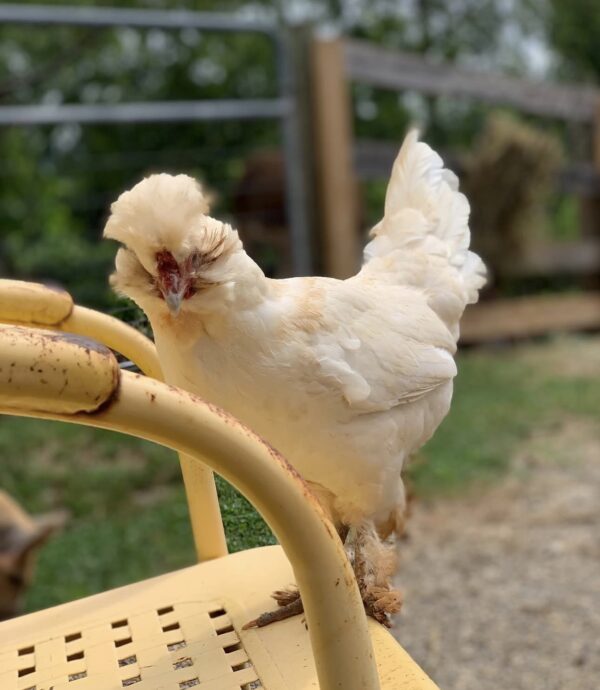
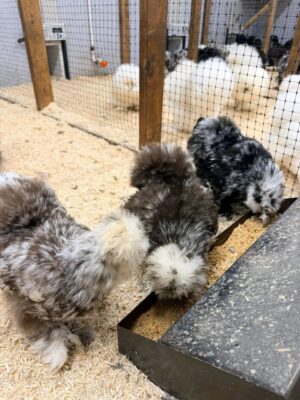
The Salmon Faverolle hen is named for her unique color pattern. Her back, wings, and tail are covered in a soft, rich salmon-brown or warm straw-colored plumage. Her breast, belly, and thighs feature a contrasting light cream or fluffy white coloration. Her head and neck are framed by a prominent, fluffy muff and beard, giving her a sweet, owl-like facial expression.
The Majestic Male Silhouette
In sharp contrast to the soft tones of the hen, the Salmon Faverolle rooster is a striking mix of bold colors. He features a brilliant straw-colored hackle, saddle, and back, paired with a solid black breast, belly, leg feathers, and tail. Striking iridescent green accents trace along his wing bows and tail coverts, making him a magnificent focal point for the yard.
Physiological Markers
The Five-Toed Trait: Unlike standard four-toed chickens, purebred Salmon Faverolles must possess a distinct fifth toe on each foot, which curves cleanly upward away from the ground.
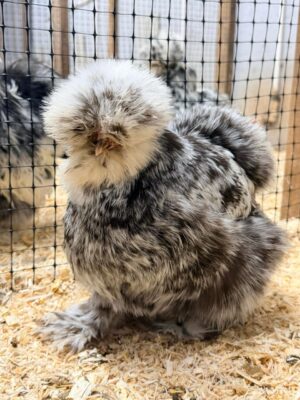
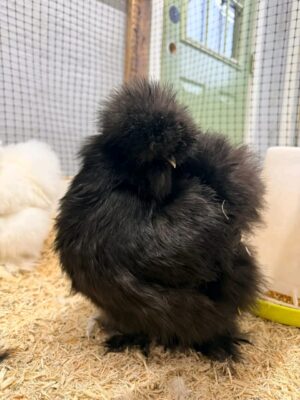
The Muffs and Beard: They feature a thick, dense grouping of feathers beneath the chin and eyes that completely obscures their earlobes and wattles.
The Low Single Comb: They sport a medium-sized, perfectly straight single comb with distinct serrations, which sits low to the head to minimize heat loss in cold weather.
Weight Standards: Mature hens weigh roughly 6.5 to 7.5 pounds ($2.9$ to $3.4\text{ kg}$), while mature roosters reach an impressive 8 to 9 pounds ($3.6$ to $4.1\text{ kg}$).
3. Behavioral Traits: The Gentle Comedians of the Poultry Yard
Beyond their beautiful looks, the behavioral characteristics of these birds make them highly sought-after additions to mixed backyard flocks and family homesteads.
Salmon Faverolles are widely considered one of the most gentle and affectionate chicken breeds in existence. They are naturally calm, non-aggressive, and incredibly curious, often rushing to the gate to greet their keepers. Their sweet demeanor and unique, expressive facial feathers make them an absolute favorite for families with young children or anyone looking for a friendly, easily handled companion bird.
Flock Dynamics and Safety
Because they are so passive and sweet-natured, Salmon Faverolles sit low on the natural flock pecking order. If housed with aggressive, high-energy breeds like Rhode Island Reds or Wyandottes, they can easily be bullied away from feed troughs and waterers.
For a harmonious coop, it is best to house them with similarly gentle, calm breeds like Brahmas, Orpingtons, or Cochins. Furthermore, because their full muffs and beards slightly limit their peripheral vision, they are more vulnerable to predators and appreciate a secure, fully enclosed run.
4. Production Dynamics: Egg Output and Nutritional Management
When bringing home young pullets or mature hens from premium listings of Salmon Faverolle for sale, understanding their production cycle helps you tailor your feeding and care routines to maximize their potential.
The Production Timeline
Salmon Faverolle hens are dependable, steady producers, typically laying their first egg between 19 and 24 weeks of age. A healthy hen will produce 180 to 240 medium-sized, light-tinted or creamy-pinkish brown eggs per year.
[ Day 1: Chick ] ---> [ Week 22: First Tinted Egg ] ---> [ Nov - April: Main Winter Production ] ---> [ Summer: Light Broody Cycle ]
Cold-Weather Winter Laying
True to their heritage as market birds built for the changing French climate, Salmon Faverolles are exceptional winter layers. Their thick feathering and small comb help them withstand sub-zero temperatures, allowing them to keep laying fresh eggs through the darkest, coldest months of the year when more fragile breeds stop completely.
5. Integrating New Salmon Faverolles Safely Into Your Flock
Bringing new birds onto your property requires a careful, methodical approach to protect the health and social structure of your existing flock.
Step 1: Strict Biosecurity Quarantine
When sourcing a new Salmon Faverolle for sale, house the incoming birds in a completely separate quarantine coop at least 30 feet away from your main flock for 14 to 21 days. Watch them closely for any signs of sneezing, wheezing, or external parasites like mites or lice before letting them interact with your established birds.
Step 2: Mesh Barrier Introductions
Move your quarantined Faverolles into a secure pen directly next to your main flock. This visual contact allows all the birds to see, smell, and vocalize with one another through a wire mesh barrier for 5 to 7 days, helping them adjust to each other without the risk of physical bullying.
After a week of visual familiarity, release the new birds along with your existing flock into a wide-open, free-range area late in the afternoon. The abundant space allows the gentle Faverolles to easily step away if an older flock leader asserts dominance. By nightfall, follow them into the coop to ensure everyone roosts peacefully together on the perches.
4. Sustainable Infrastructure: Designing Accommodations for Feathered Feet
Because of their dense facial feathers, feathered legs, and passive nature, Salmon Faverolles require specific coop adjustments to keep them safe, clean, and healthy. For detailed coop blueprints and yard designs, explore the homestead resources over at Grassfield Homestead.
Structural Feature
Minimum Standard Requirement
Purpose
Coop Floor Space
4-5 sq. ft. per bird
Gives them plenty of room to move comfortably without damaging their feathers.
Exterior Run Space
10-12 sq. ft. per bird
Provides safe space to exercise away from aggressive breeds.
Roosting Bar Height
18-24 inches from the floor
Allows these heavy, low-flying birds to land safely without hurting their feet.
Nest Box Dimensions
12″ x 12″ x 12″ cubic space
Offers a dark, cozy, and private space for stress-free egg-laying.
Muff, Beard, and Mud Management
The most critical part of managing Salmon Faverolles is keeping their fluffy facial and leg feathers clean and dry. In wet weather, their long beards can dip into standard water bowls, becoming damp and caked with feed paste or mud. In the winter, a wet beard can easily freeze into ice balls, making them vulnerable to frostbite.
To prevent this, use nipple-style poultry waterers instead of open dishes, and ensure your outdoor run is well-drained and covered with a thick layer of coarse wood chips or clean straw.
7. Trusted Heritage and Poultry Organizations
To learn more about heritage breed preservation, poultry health, and integrated small-farm management, consult these leading agricultural research extensions and preservation organizations:
Poultry Associations & Research Extensions
The Livestock Conservancy: A premier non-profit organization dedicated to protecting historic, endangered livestock and poultry breeds to preserve genetic diversity.
The American Poultry Association (APA): The official governing body responsible for maintaining breed classifications and standard judging criteria across North America.
8. Build a Balanced Homestead with Golden Hive Farm
Cultivating a resilient homestead is a rewarding journey rooted in a deep respect for natural systems. By pairing the winter-laying reliability of heritage continental poultry with the seasonal pollination power of healthy honeybee colonies, you create a sustainable, self-reinforcing cycle that brings life and abundance to your land.
At Golden Hive Farm and Grassfield Homestead, we are committed to providing you with the high-quality gear, elite apiary setups, and expert guidance needed to help your homestead thrive. Explore our complete selection of premium hives, protective equipment, and educational guides today, and discover how bringing quality, care, and structural precision to your land can transform your harvest for seasons to come!
Reference Manual Architecture
American Poultry Association. (2010). The American Standard of Perfection. American Poultry Association, Inc.
Foucault, L. (1894). Le Manuel de l’Éleveur de Faverolles. Librairie Agricole de la Maison Rustique.
The Livestock Conservancy. (2023). Heritage Poultry Breeding and Selection Manual. The Livestock Conservancy Publications.
Seeley, T. D. (2019). The Lives of Bees: The Untold Story of the Honey Bee in the Wild. Princeton University Press.

Reviews
There are no reviews yet.