$25.00Original price was: $25.00.$20.00Current price is: $20.00.
Sourcing Premium Wyandotte Pullets for Sale for Heavy Egg Yields and Striking Plumage
For backyard poultry keepers, homesteaders, and small-scale farmers looking to build a dependable, all-weather flock, selecting birds with structural resilience, excellent foraging capability, and steady egg production is a top priority. Just as establishing a productive apiary requires finding calm, robust biological genetics for your hives, growing your poultry flock depends on choosing the right foundational stock. Among the classic American dual-purpose breeds, few match the dependability, cold-hardiness, and striking beauty of the Wyandotte.
At Golden Hive Farm, we are dedicated to supporting sustainable homesteading and self-sufficient agriculture. While our core mission centers on manufacturing elite woodenware and sourcing biological essentials for honeybee colonies, we appreciate the deeper agricultural connection—where poultry and pollinators work together to improve soil health and create a thriving backyard ecosystem. Working with our trusted partners at Grassfield Homestead, we have put together this guide to help you design, build, and manage a productive flock. Let’s look at the history, breed standards, and management practices you need to know when evaluating premium Wyandotte pullets for sale to upgrade your property.
1. The History and Development of a True American Classic
To understand why experienced poultry keepers consistently prioritize Wyandotte pullets for sale when looking for dependable egg production, it helps to explore the history of this historic breed. Developed in upstate New York and Michigan during the 1870s, the Wyandotte was named in honor of the indigenous Wyandot Nation.
+-----------------------------------+
| Dark Brahma & Silver Spangled     |
| Hamburg Foundational Crosses      |
+-----------------------------------+
                  |
                  v  (Crossed with Breda & Buff Cochin Genetics)
+-----------------------------------+
|    The Original Silver Laced      |
|           Wyandotte               |
| - The standard-bearing baseline  |
+-----------------------------------+
                  |
                  v  (Diversified into recognized color lines)
+-----------------------------------+
|      Modern Wyandotte Strains     |
|   - Golden Laced, Blue, & Columbian|
|   - Exceptional winter laying     |
+-----------------------------------+
Early American breeders set out to create a bird tailored to the unforgiving, freezing winters of the northeastern United States. They crossed Dark Brahmas, Silver Spangled Hamburgs, Bredas, and Buff Cochins to combine heavy body mass with a tight, frost-resistant comb. The resulting Silver Laced variety was officially admitted to the American Poultry Association’s Standard of Perfection in 1883, quickly becoming a staple of American family farms due to its meat quality and exceptional winter egg production.
2. Breed Standards and Physical Characteristics of Wyandotte Pullets
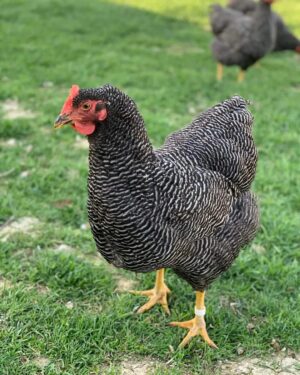
When browsing hatchery listings or visiting local farms to evaluate Wyandotte pullets for sale, knowing the official breed standards ensures you are investing in authentic, healthy, and high-quality stock. A purebred Wyandotte is easily recognized by its distinctive shape and feather patterns.
The Rose Comb Advantage
A key identifying feature of the Wyandotte is its small, flat, and velvety red rose comb. This comb sits low and tight against the skull, ending in a small spike that follows the curve of the head. Because it lacks the tall, exposed points of a standard single comb, it is virtually immune to winter frostbite, allowing these birds to maintain peak health and energy through sub-zero weather.
Body Shape and Weight Specs
Wyandottes are large, heavy birds with a distinct, round silhouette. Their bodies are deep and broad, carried on stout, featherless yellow legs.
Pullets (Young Females): Typically weigh between 5.5 to 6.5 pounds ($2.5$ to $2.9\text{ kg}$) as they approach laying age.
Mature Hens: Reach an average weight of 7.5 pounds ($3.4\text{ kg}$).
Feather Profile: They carry dense, tightly packed feathers that provide excellent insulation against both damp cold and baking summer heat.
Popular Color Varieties
While the historic Silver Laced pattern remains incredibly popular, generations of selective breeding have introduced a wide range of beautiful color varieties:
          Popular Wyandotte Color Varieties

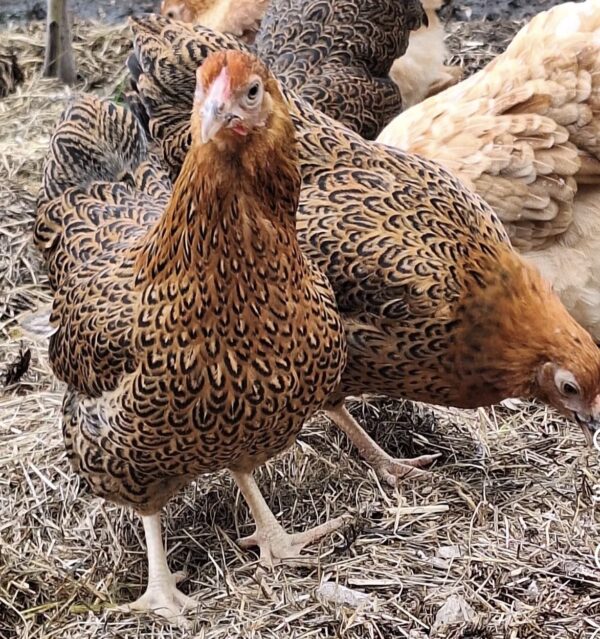
    [ Silver Laced ] -> Creamy white feathers clean-edged in sharp black
    [ Golden Laced ] -> Rich golden-bay feathers bordered in lustrous black
    [ Columbian ] ----> Solid white body with striking black hackles and tail
    [ Blue Laced ] ---> Warm reddish-gold feathers laced in slate-grey
3. Behavioral Dynamics: Temperament and Flock Management
Beyond their steady production, understanding the behavioral traits of Wyandottes makes managing your daily flock tasks significantly easier.
Wyandottes are confident, independent, and steady birds. They are generally calm and easy to work with, though they are often less attention-seeking than softer breeds like Salmon Faverolles or Brahmas. In a mixed-breed setup, their size and confident nature place them at the mid-to-high end of the pecking order. They hold their own well and are rarely bullied, making them an excellent choice for stabilizing a multi-breed backyard flock.
Foraging Efficiency and Containment
These birds are fantastic foragers. When allowed to free-range, they actively search for grubs, ticks, beetles, and weed seeds, converting backyard pests into rich nutrients for egg production. Because they are heavy and thick-bodied, they are poor flyers. A standard 4-to-5-foot boundary fence is typically all it takes to keep them safely contained within your yard or run.
4. Production Metrics: Year-Round Eggs and Feed Efficiency
When you choose young birds from listings of Wyandotte pullets for sale, setting up an optimal environment and proper feeding schedule helps them hit their stride as they begin their laying cycles.
The Laying Timeline
A healthy Wyandotte pullet will typically lay her first egg between 20 and 24 weeks of age. Once mature, a hen will reliably produce 200 to 260 large, brown eggs per year. Thanks to their heritage genetics, they maintain consistent, dependable laying levels for 3 to 4 years before showing a slow, natural decline.
[ Day 1: Chick ] ---> [ Week 22: First Brown Egg ] ---> [ Nov - March: Uninterrupted Winter Lay ] ---> [ Year 4+: Slow Decline ]
Dependable Winter Laying Performance
Many modern egg-laying breeds stop laying completely as daylight hours drop in late autumn and winter. Because the Wyandotte was explicitly bred for cold climates, they are outstanding winter layers. Their heavy insulation and frost-resistant rose combs allow them to keep producing fresh eggs through the coldest months of the year without needing artificial coop heating.
5. Integrating New Wyandotte Pullets Safely Into Your Flock
Bringing new pullets home requires a patient, stepped introduction to safeguard your flock’s health and minimize stress during the transition.
Step 1: Strict Biosecurity Quarantine
When sourcing any Wyandotte pullets for sale, house the incoming birds in a separate quarantine pen at least 30 feet away from your main flock for 14 to 21 days. Check them daily for signs of respiratory issues, clear eyes, and any external pests like mites or lice before moving forward.
Step 2: Shared Mesh Barriers
Once quarantine is complete, move the new pullets into an integration pen right next to your main flock. This visual setup allows all the birds to see, hear, and interact with each other through a secure wire mesh barrier for 5 to 7 days, helping them acclimate without the risk of pecking injuries.
After a week of visual contact, gently move the new pullets onto the main coop’s roosting bars after dark while your existing flock is asleep. Because chickens are calm and sleepy at night, waking up next to each other the following morning significantly reduces territorial bullying.
6. Sustainable Infrastructure: Designing the Perfect Wyandotte Coop
Because Wyandottes are large, heavy birds with thick feathering, their housing should meet specific structural standards to keep them dry and comfortable. For detailed coop layout designs and blueprints, check out the resources over at Grassfield Homestead.
Structural Component
Minimum Requirement per Bird
Design Purpose
Indoor Floor Space
4-5 sq. ft.
Prevents crowding and reduces feather-picking behaviors during bad weather.
Outdoor Run Space
10-12 sq. ft.
Gives them plenty of room to exercise, dust-bathe, and forage comfortably.
Roosting Bars
10-12 linear inches
Provides ample perch space to comfortably accommodate their wider frames.
Nest Box Size
12″ x 12″ x 12″ cubic space
Offers a dark, secure, and private space for comfortable egg-laying.
Ventilation and Managing Moisture
While Wyandottes handle the cold incredibly well, moisture is their biggest enemy in freezing weather. Damp air from respiration and droppings can build up inside an unventilated coop, settling on exposed tissues and increasing the risk of respiratory issues.
Ensure your coop has high, open vents located well above the roosting bars. This layout draws out damp, stale air without creating direct, chilly drafts across your birds while they sleep.
7. Trusted Heritage and Poultry Organizations
To learn more about heritage breed preservation, poultry health, and integrated small-farm management, consult these leading agricultural research extensions and preservation organizations:
Poultry Associations & Research Extensions
The Livestock Conservancy: A premier non-profit organization dedicated to protecting historic, endangered livestock and poultry breeds to preserve genetic diversity.
The American Poultry Association (APA): The official governing body responsible for maintaining breed classifications and standard judging criteria across North America.
8. Build a Balanced Homestead with Golden Hive Farm
Cultivating a resilient homestead is all about understanding and working with natural systems. By pairing the winter-laying reliability of heritage American poultry with the seasonal pollination power of healthy honeybee colonies, you create a sustainable, self-reinforcing cycle that brings life and abundance to your land.
At Golden Hive Farm and Grassfield Homestead, we are committed to providing you with the high-quality gear, elite apiary setups, and expert guidance needed to help your homestead thrive. Explore our complete selection of premium hives, protective equipment, and educational guides today, and discover how bringing quality, care, and structural precision to your land can transform your harvest for seasons to come!
Reference Manual Architecture
American Poultry Association. (2010). The American Standard of Perfection. American Poultry Association, Inc.
The Livestock Conservancy. (2023). Heritage Poultry Breeding and Selection Manual. The Livestock Conservancy Publications.
Seeley, T. D. (2019). The Lives of Bees: The Untold Story of the Honey Bee in the Wild. Princeton University Press.
Smith, P. (2017). The Chicken Keeper’s Manual: A Practical Guide to Sourcing and Managing High-Yield Flock Genetics. Timber Press.


Reviews
There are no reviews yet.